
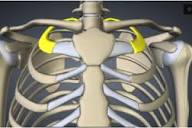
The first rib sits beneath the clavicle and plays an important role in the mechanics of the neck, shoulder, and upper thorax. When it becomes restricted or elevated, it can lead to:
– Chronic neck muscle tension
– Shoulder dysfunction and limited range of motion
– Nerve irritation into the arm
– Ongoing pain that doesn’t fully respond to typical treatment approaches
Fascial Counterstrain is a gentle manual therapy technique that reduces abnormal tissue tension by positioning the body in ways that allow irritated structures to calm and reset. Instead of forcing mobility, it works by decreasing neurological and fascial strain patterns.
When applied to the first rib, it can help:
– Release surrounding scalene and upper thoracic tension
– Improve rib and shoulder girdle mechanics
– Reduce nerve and vascular compression
– Support more efficient fluid and tissue balance, including effects on cervical and thoracic venous drainage systems
Clinically, patients often report noticeable improvements in neck mobility, shoulder comfort, and reduction of chronic tension patterns once the first rib is released. Many times the cause of pain is the fascial restriction in the spinal medullary veins of the cervical spine. By evaluating and manually decompressing that structure, the elevated or stuck first rib will fall gently into proper alignment.
If you’re dealing with persistent neck or shoulder pain that hasn’t fully responded to standard care, evaluating the first rib may be an important next step.
See you in the clinic,
Dr. Dmitry Shestakovsky
Dmitry Shestakovsky, DPT
Founder | Midtown East Physical Therapy
12 East 46th Street | Suite 501
New York, NY 10017
(212) 922-0044
Founder | Omega Physical Therapy
2327 83rd Street | Suite C
Brooklyn NY, 11214
(718) 996-9929