
Physical Therapy Services
Fascial Counterstrain
A hands-on method for releasing spasm throughout the body.
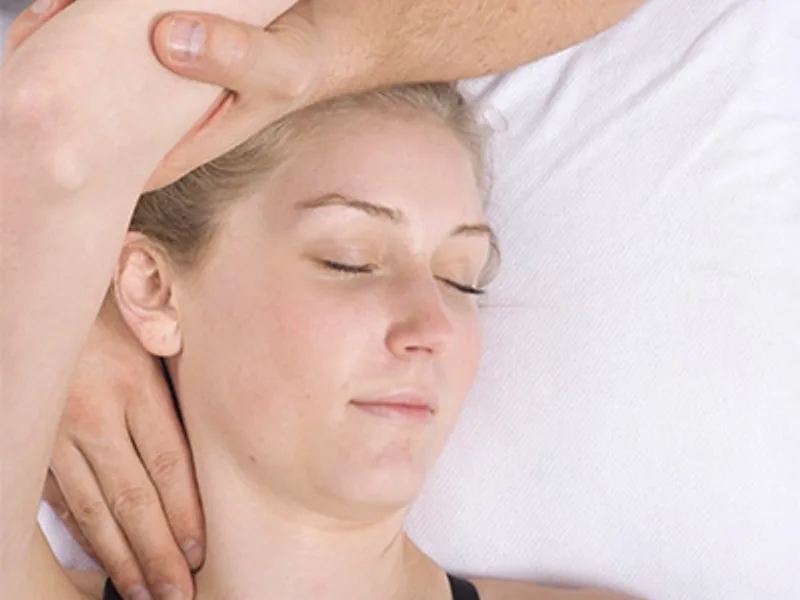
Fascial Counterstrain
Fascial Counterstrain (FCS) is an innovative therapeutic, hands-on method, designed to release spasm in all tissues of the human body. Reflex muscle contractions occur in skeletal muscle, smooth muscle or in the body's deep fascia structures due to a variety of reasons including trauma, surgery, postural strain, repetitive motion, even in response to an inflammatory diet. Once this reflex spasm is triggered it can persist, and form tender points which are tender to touch. FCS works to release the tissue in spasm and the corresponding tender point by decompressing the injured structures.
How It Works
How Fascial Counterstrain is done
Fascial Counterstrain is done entirely by hand, with you lying or sitting comfortably and fully clothed. The therapist palpates for the tender points that mark a tissue held in reflex spasm, then moves the body part into the position in which that point stops being tender — usually a shortened, slackened position that takes tension off the structure. The position is held while the tissue settles, then the limb or segment is returned slowly to neutral.
There is no thrust, no stretching into pain and no forceful pressure. Because the technique is organised around finding the point rather than working an area, a session often involves treating somewhere other than where you feel the symptom.
What It Addresses
What Fascial Counterstrain is used for
Fascial Counterstrain is used here to address presentations like these. Whether it is the right technique for you is decided at your evaluation, not before it.
- Tenderness and guarding in muscle, ligament, tendon and deep fascia
- Restriction that has persisted after an injury, a surgery or a period of postural strain
- Pain that moves or refers, where the sore spot and the source are not in the same place
- Patients who do not tolerate deep pressure or high-velocity techniques well
What to Expect
One-on-one care, built around you
Your care begins with a one-on-one evaluation. Rather than focusing on the symptoms alone, we establish a cause and effect relationship through accurate palpation and assessment of the body, then build a rehabilitation program customized to your individual needs.
- The first visit is an evaluation. The therapist takes your history, then works through the relevant regions by hand to map which structures are tender and how they relate to your symptoms.
- Treatment usually begins in the same visit. You stay clothed; the therapist positions you, holds, and releases. Most of the session is spent lying down.
- You will normally be given a small amount to do between visits — a position, a movement or an activity adjustment — rather than a long exercise sheet.
- What is found on the first visit determines how the plan is built from there. It is discussed with you rather than set in advance.
Common Questions
Questions we are asked about Fascial Counterstrain
- Does Fascial Counterstrain hurt?
- The technique is designed to work in the direction of comfort rather than against it — the treatment position is the one in which the tender point stops being tender. Finding the points involves light palpation, which can be sensitive on an irritated area. Tell your therapist if anything is uncomfortable; the pressure and the position are both adjustable.
- Why is the therapist treating somewhere other than where it hurts?
- Counterstrain works from the tender point, not the symptom. A structure held in spasm can produce symptoms some distance from itself, so the point that needs releasing is often in a different region from the one you came in about. The therapist will explain what they have found and why they are working where they are.
- What should I wear?
- Loose, comfortable clothing you can move in. Nothing needs to be removed — the technique is performed through clothing — but the therapist does need to be able to reach and position the area, so avoid restrictive belts, thick denim or heavy layers over the region being treated.
- How many visits will I need?
- That depends on what the evaluation finds, and it is not something we put a number on before we have assessed you. Your therapist will talk through the plan with you after the first visit and revise it as the picture changes.
- How do I book, and is it covered?
- We accept major insurance providers, but coverage for Fascial Counterstrain varies by plan, and some plans ask for a physician's referral or prescription while others do not. Call (212) 922-0044 before your first visit and we will confirm your coverage and tell you what, if anything, you need to bring.