
Physical Therapy Services
TMJ Treatment
Manual care for the jaw, and everything connected to it.
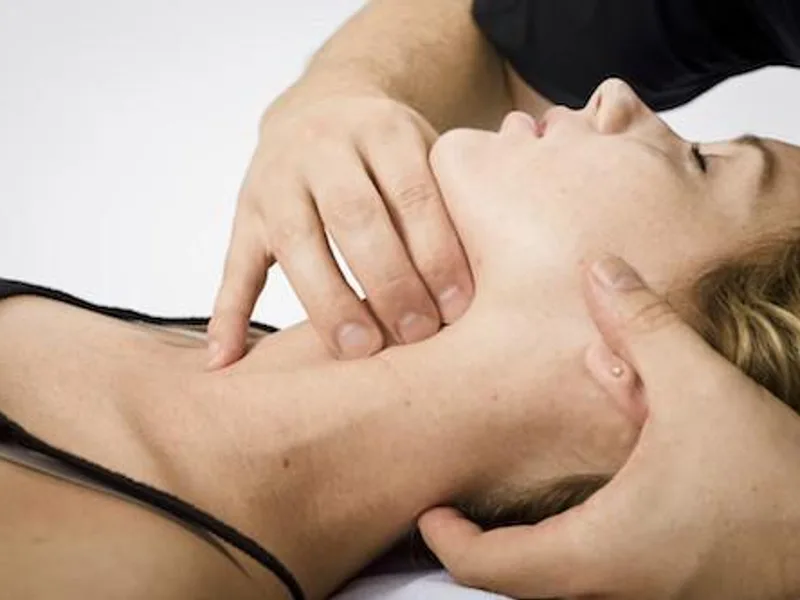
TMJ Treatment
The temporomandibular joint connects the jaw to the skull and works with the muscles of the jaw, head, and neck. When it is irritated, patients often notice jaw pain, clicking, limited opening, or discomfort that carries into the face, ear, or neck. Our therapists examine the jaw alongside the neck and upper back, because restriction in one commonly involves the others, and treat what the examination finds using the same hands-on techniques used throughout the practice.
How It Works
How we treat the jaw
The jaw is assessed alongside the neck and upper back, because restriction in one region commonly involves the others. The therapist watches and measures how the jaw opens, closes and moves side to side, palpates the muscles of the jaw, face and neck, and identifies which structures reproduce your symptoms.
Treatment is hands-on. It may include work on the muscles outside the jaw, gentle work on the joint itself, treatment of the neck and upper back, and specific movement work you continue between visits. Intra-oral technique is used in some cases; if it is appropriate for you, it is explained and consented to first.
What It Addresses
What TMJ treatment addresses
TMJ treatment here is used to address presentations like these, alongside your dental care rather than instead of it.
- Jaw pain, clicking, catching, or limited opening
- Discomfort that spreads from the jaw into the face, ear or temple
- Jaw symptoms that occur alongside neck pain or headache
- Tension patterns associated with clenching or grinding, alongside dental care
What to Expect
One-on-one care, built around you
Your care begins with a one-on-one evaluation. Rather than focusing on the symptoms alone, we establish a cause and effect relationship through accurate palpation and assessment of the body, then build a rehabilitation program customized to your individual needs.
- Measurement and observation of how far and how symmetrically your jaw opens, plus assessment of the neck and upper back.
- Palpation of the jaw and facial muscles to find which structures reproduce your symptoms — expect the therapist to work outside the mouth first.
- Hands-on treatment, plus specific jaw movement and positioning work to continue at home. This is the part that carries the session between visits.
- Coordination with your dentist where a splint, night guard or dental treatment is part of the picture. Bring the details if you have them.
Common Questions
Questions we are asked about TMJ Treatment
- Does the therapist work inside my mouth?
- Sometimes, and only when it is indicated and you have agreed to it. Most of the assessment and treatment is done outside the mouth, on the jaw, face, neck and upper back. If intra-oral technique is appropriate, it will be explained first and gloves are always used.
- I already have a night guard from my dentist. Should I keep wearing it?
- Yes — keep following your dentist's instructions. What is done here works alongside dental care rather than instead of it. Tell us what you have been given so it forms part of the plan.
- Why is my neck being examined for a jaw problem?
- The jaw, neck and upper back function together, and restriction in one commonly involves the others. Assessing the neck is part of examining the jaw properly, not a detour.
- Will it be sore afterwards?
- Mild tenderness in the jaw and surrounding muscles for a day or so is common after treatment, and you may be advised to eat softer food that evening. Anything sharper or longer-lasting is worth a call.
- How do I book?
- Call (212) 922-0044 and the front desk will book a TMJ evaluation at whichever office suits you — 12 E. 46th Street in Midtown East, 274 Madison Avenue, or 1995 Broadway on the Upper West Side. You can also request an appointment through our Zocdoc listing. New patient forms are on the New Patients page as a PDF, and filling them in beforehand shortens your check-in.
Explore More