
Physical Therapy Services
Manual Medicine
Hands-on diagnosis and treatment of musculoskeletal conditions.
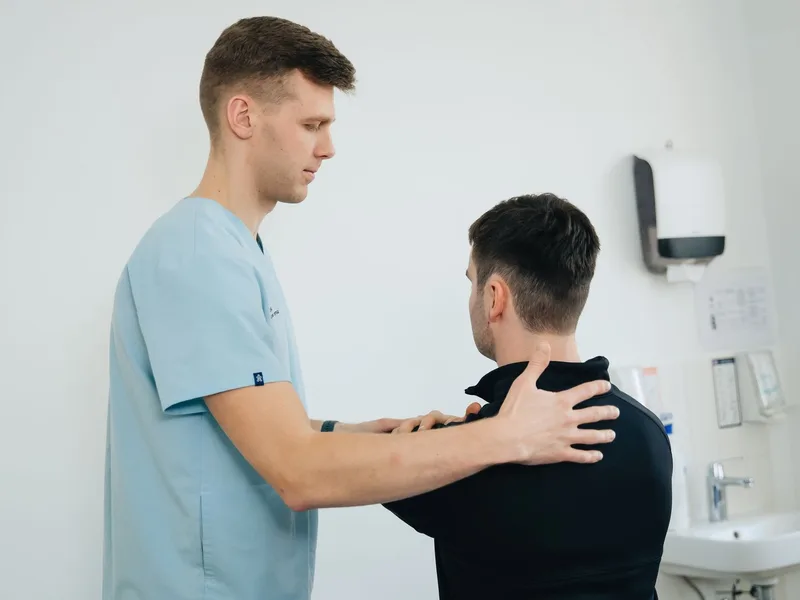
Manual Medicine
Manual Medicine is a specialized approach to healthcare that emphasizes hands-on techniques for diagnosing and treating musculoskeletal conditions. This comprehensive and non-invasive practice involves skilled assessment, manipulation, and mobilization of the body’s tissues, aiming to alleviate pain, improve mobility, and enhance overall well-being.
How It Works
How manual medicine works
Manual medicine is the umbrella for the hands-on side of the practice: assessment by palpation and movement testing, then treatment delivered by the therapist rather than by a machine. In practice that means the therapist feels how a region moves and how the tissue responds, forms a working explanation for your symptoms, treats, and re-tests to see whether the explanation held.
The specific techniques used — counterstrain, mobilisation, manipulation, soft tissue work — are chosen from the examination rather than fixed in advance, and more than one is usually used in the same session.
What It Addresses
What manual medicine is used for
Manual medicine is the hands-on core of the practice, used to address presentations like these.
- Musculoskeletal pain and restriction that has not settled on its own
- Cases where the source of the symptom is unclear and needs assessing by hand
- Movement limitation affecting daily activity, work posture or sport
- A conservative, non-invasive starting point before more involved options
What to Expect
One-on-one care, built around you
Your care begins with a one-on-one evaluation. Rather than focusing on the symptoms alone, we establish a cause and effect relationship through accurate palpation and assessment of the body, then build a rehabilitation program customized to your individual needs.
- A full one-on-one evaluation at the first visit: your history, what makes the problem better and worse, movement testing, and hands-on assessment.
- An explanation of what the therapist found, in plain terms, before treatment starts.
- Hands-on treatment in the same visit where the assessment supports it, followed by a re-test of whatever was limited so you can both see the change.
- A home component matched to the finding, and a plan that is reviewed at each visit rather than fixed at the first.
Common Questions
Questions we are asked about Manual Medicine
- What actually happens at a first appointment?
- It is one-on-one with a therapist. They take your history, test how you move, and assess the region by hand to establish a cause-and-effect relationship rather than treating the sore spot alone. Treatment normally begins in the same visit, and a rehabilitation program is built around what was found.
- How long is an appointment?
- Appointment length varies with what is being treated and whether it is an initial evaluation or a follow-up. The front desk will tell you what to allow for when you book — call (212) 922-0044.
- Do I need imaging before I come in?
- Not necessarily. If you already have an X-ray, MRI or CT report for the area, bring it, as it saves time and adds to the picture. If you do not, the therapist assesses by history and examination and will tell you if they think imaging or a physician referral is warranted.
- What should I bring?
- Your insurance card, a list of medications, any imaging or reports for the area, and any referral or prescription you have been given. Our new patient forms can be downloaded and filled in beforehand, which makes check-in quicker.